


"I want to further promote the power of visual storytelling in the coming decades"
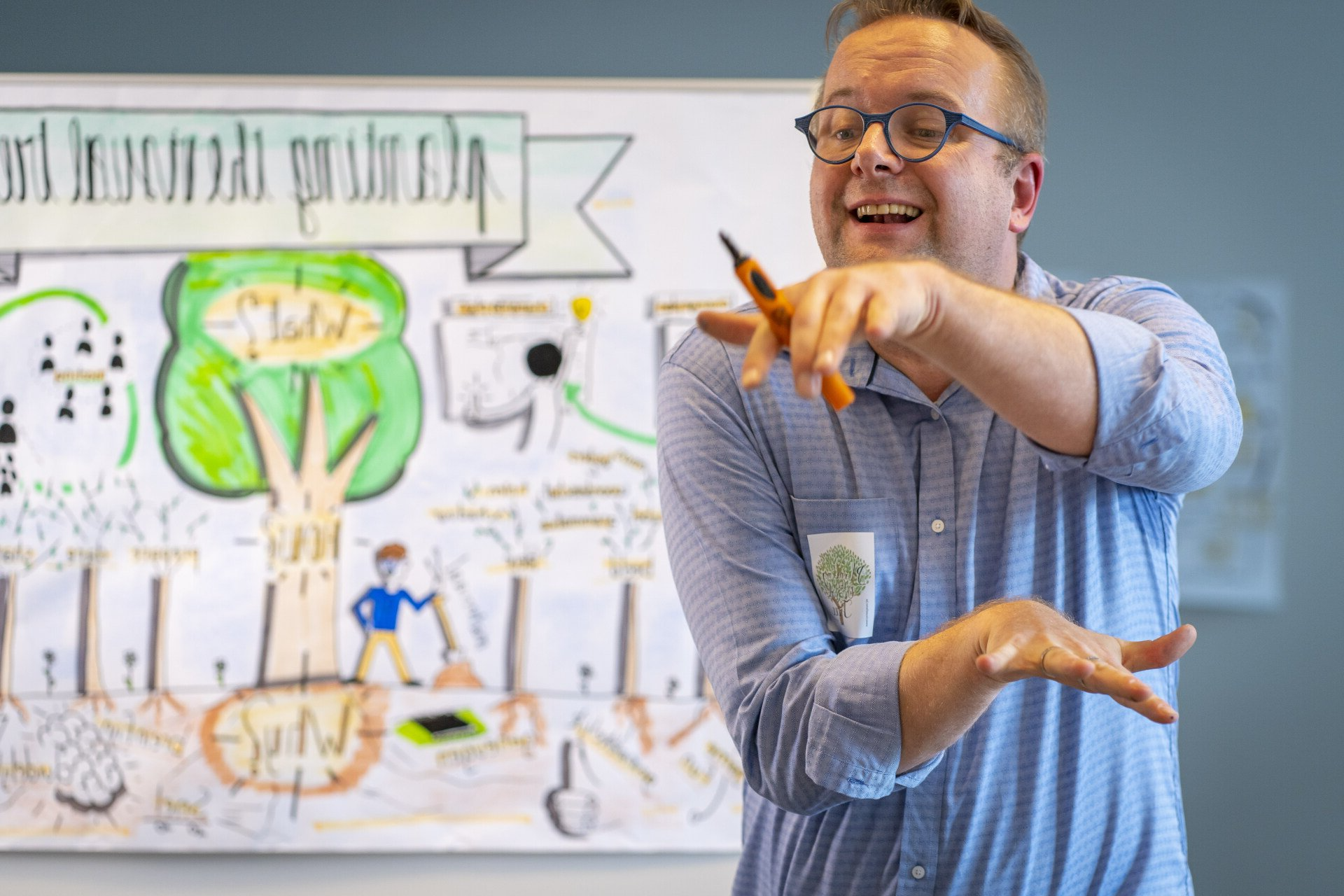
"Karl took his first steps as a coach in September 1996"
Karl speaking:
“More than 25 years later, I look back on this quarter century with many fond memories.”
The most important lessons learned from these 25 years are undoubtedly the understanding and importance of lifelong learning and a constant focus on innovation in both content and methodology. As a trainer, using the same approach and content as 25 years ago is not appreciated by clients. Every year, I take at least one training course and participate in supervision and peer review with colleagues. Then I notice that change is happening faster and faster. Constantly staying alert and adapting is the key. The coronavirus crisis has clearly emphasized this.
"Experience is the laboratory for dealing with change"
I could tell you a lot about how, as a trainer, I'm constantly on the lookout for innovation. Often, however, this happens organically. You learn something and then you apply it immediately. Experience is the laboratory for managing change. My common thread over the past few years has clearly been the introduction of "visualization" as a supporting tool in all my interventions.
“I am not a fan of Powerpoint presentations”
In the early years, I spent hours preparing to summarize knowledge in beautiful presentations. Once you finished your PowerPoint presentation, you thought your training was over: the pitfall... A well-structured presentation is no guarantee of a dynamic, engaging intervention.
I kept searching. During a "Mind Mapping" training course, I met Bernard Lernout and later Bob Onkelinx, who remain my role models in many areas. A new world opened up for me, and based on the "lifelong learning" credo, I wanted to delve deeper into visual learning. Through Bernard, I also met Tony Buzan, the inventor of Mind Mapping. His vision of visual learning opened many new visual doors.
The saying "a picture is worth a thousand words" became increasingly clear to me. It means that multiple and often complex ideas can be explained through images, which convey the message or its essence more effectively than a mere verbal description.
"I see myself as a visual storyteller"
Visual symbols are more concrete than spoken words. I consider myself a visual storyteller. And if I also draw this information on the spot, the intervention becomes even more engaging. I even notice that trainees and coachees also draw along.
"I want to further spread the power of visual storytelling in the coming decades"